

What fleet compliance really means
For a fleet manager, compliance is not a single certificate you obtain once. It is a state every vehicle has to be kept in, every day, across the whole fleet. A first aid kit that was compliant when the van was delivered can quietly fall out of compliance three months later, and nothing warns you until an inspection, an insurance claim or an actual emergency exposes it.
Fleet compliance for vehicle safety comes down to three questions asked of every vehicle at once: is the required first aid and hygiene provision present, is it complete and in date, and is it reachable in seconds. Getting a yes to all three on one van is easy. Getting it on fifty is the real job.
What the rules actually require
The legal baseline differs by country, but the pattern is consistent across the Benelux and much of Europe. Under the Belgian Codex over het welzijn op het werk and the Dutch Arbowet, a commercial vehicle used for work counts as a workplace, which means first aid must be available on board, and where a risk assessment requires it, eyewash as well.
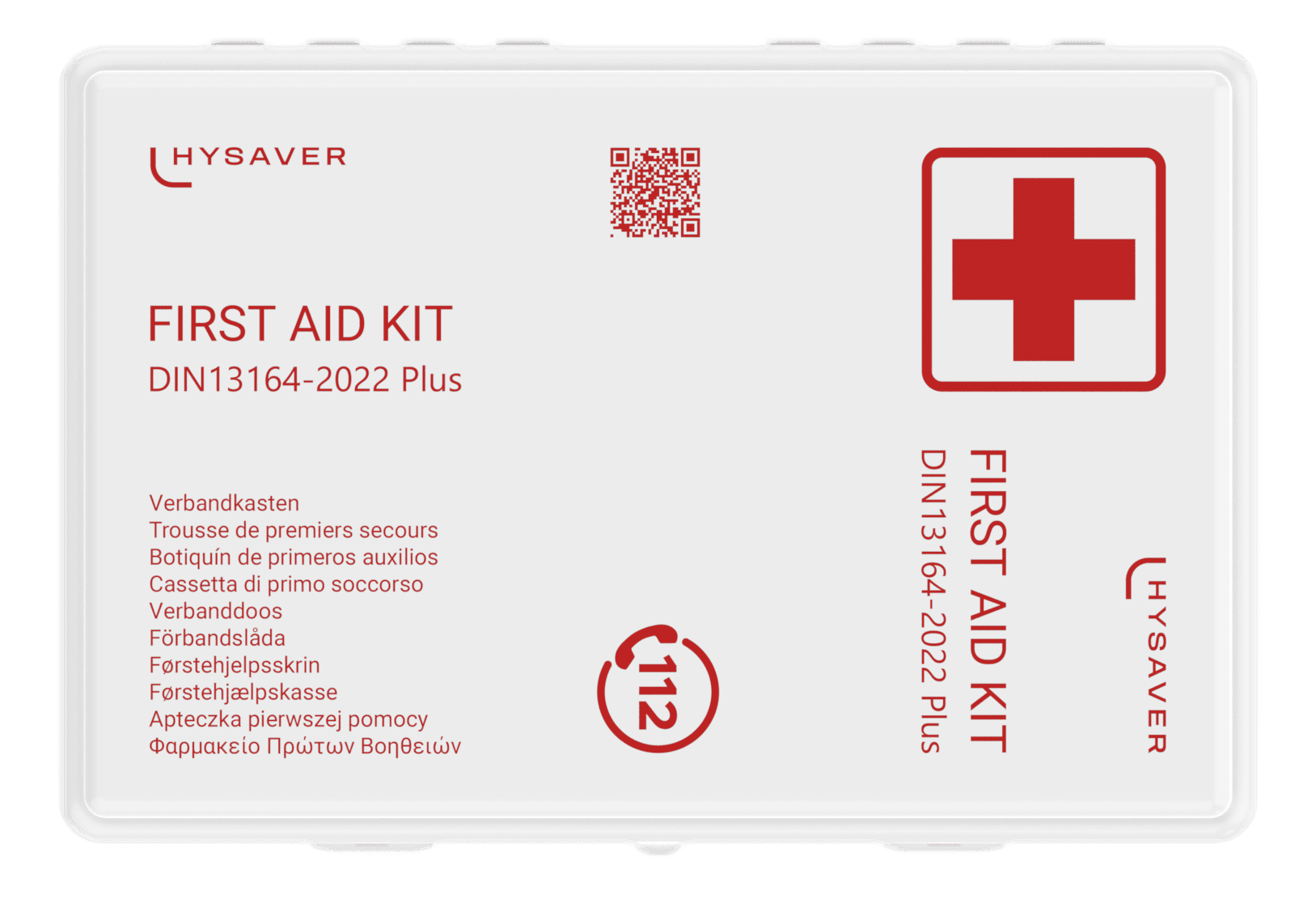
For the road-traffic side, the widely recognised benchmark is the DIN 13164 first aid kit, which functions as the de facto European specification and covers most border crossings from a single standard. Exactly which standard applies where is set out in our guide to vehicle first aid kit requirements by country. For a fleet, standardising on DIN 13164 removes the guesswork of tracking a different rule per country.
Why fleets fall out of compliance
Compliance is almost never lost at the point of purchase. It erodes over time, and the failure modes are predictable:
- Expired contents. Sterile dressings, compresses and wipes carry expiry dates. A kit can be physically complete and still non-compliant because its contents lapsed.
- Used and never restocked. A single plaster taken and not replaced leaves the kit incomplete for months.
- Buried or unreachable. A kit under tools or cargo fails the "reachable in seconds" test even if it is present and complete.
- Inconsistent provision. Different vans fitted with different kits, or no eyewash where a risk assessment required it, so the fleet passes on paper but not in reality.
- No inspection rhythm. Nobody owns the check, so problems surface only during an audit.
Across one vehicle these are minor. Across a fleet they compound, and a fleet is only as compliant as its worst-maintained van.
How to keep a whole fleet compliant
The fix is systematic rather than complicated. The fleets that stay compliant treat it as a process:
- Standardise the kit. One specification, ideally DIN 13164, across every vehicle, so a compliant van in Antwerp matches a compliant van in Aachen. Read more on the value of fleet standardisation.
- Fix its position. Mount the kit in a fixed, visible spot in every vehicle so it is always reachable and always in the same place. Drivers should not have to search.
- Run a short recurring inspection. A brief monthly check per vehicle catches expiries and shortfalls early, before they become a fleet-wide gap.
- Make restocking frictionless. Keep spare refills at the depot so a used or expired component is swapped in seconds, not left pending.
One unit that holds the whole fleet to standard
This is exactly what the HYSAVER unit is built for. It integrates a DIN 13164 first aid kit together with eyewash, soap and paper in one fixed, visible position inside the vehicle, pre-stocked and compliant out of the box, with tool-free replacement. Standardising a fleet on one unit means every vehicle is set up the same way, checked the same way and restocked the same way.
For a mixed fleet with premises as well, HYSAVER can supply kits certified to DIN 13157, DIN 13169 and UK BS 8599, so vehicles and buildings are covered from a single supplier. Refills and replacement kits are available at store.hysaver.com.
To map exactly which requirements apply to your vehicles and sites, get in touch and we will help you standardise the fleet.
Questions or interested in HYSAVER? Get in touch.