

Hygiene and safety in a commercial vehicle, by the standard
A commercial vehicle used for work is two things at once: a vehicle on the road and, in most of Europe, a mobile workplace. That dual status is why hygiene and safety in a van are governed not by one rule but by a small family of DIN standards, alongside the workplace duties that in the Netherlands and Belgium fall under BHV (bedrijfshulpverlening) and welzijn-op-het-werk obligations.
This guide pulls those threads together: which DIN standard covers what, where BHV emergency response fits, and what a genuinely compliant van actually needs on board.
The DIN standards that apply to vans
Three German DIN standards come up constantly, and because the numbers are so close they are routinely confused:
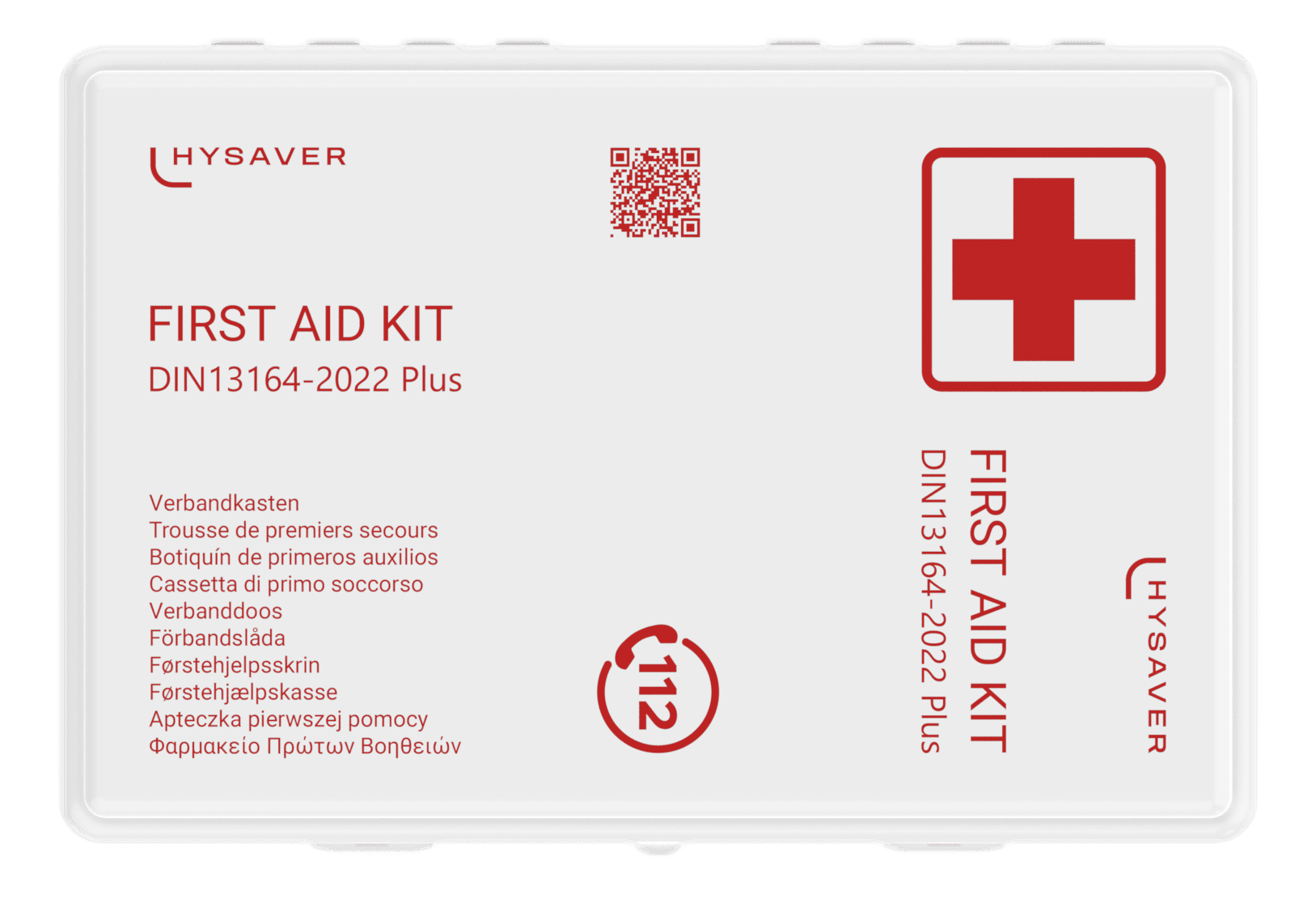
- DIN 13164 is the motor vehicle first aid kit. This is the one tied to road-traffic use and the one most fleets standardise on. Its full contents are set out in our DIN 13164 specification guide.
- DIN 13157 is the small workplace kit.
- DIN 13169 is the large workplace kit, essentially two DIN 13157 kits combined.
The current motor-vehicle edition is DIN 13164:2022, which added two face masks over the older 2014 version. DIN 13164 is a German national standard, but it functions as the de facto European specification for vehicle first aid, which is why one kit covers most border crossings. We compare all three side by side in our German first aid standards guide.
The distinction matters because a van can need more than one. A light commercial vehicle used for work is often treated as both a road vehicle (needing DIN 13164) and a workplace (where DIN 13157 provision and a risk assessment may apply). Getting this right is the core of workplace safety compliance for commercial vehicles.
Where BHV fits in
DIN standards tell you what equipment to carry. BHV (bedrijfshulpverlening) is the other half: the Dutch legal duty, under the Arbowet, to organise emergency response, of which first aid is a central part. The Belgian equivalent sits within the Codex over het welzijn op het werk.
For a fleet, the practical link is simple. BHV duties assume that first aid provision is actually present, complete and reachable when an incident happens. A DIN 13164 kit that is expired, half-empty or buried under cargo does not satisfy the spirit of BHV even if a kit is technically in the vehicle. In other words, the DIN standard defines the equipment; BHV and the welzijn rules define the obligation to have it usable when it counts.
That is why hygiene belongs in the same conversation. Hand hygiene, eyewash and clean-up matter both for day-to-day work and for first response. Under the Belgian rules, eyewash may be required on board where a risk assessment identifies the hazard.
What a compliant van actually needs
Pulling the standards and duties together, a van used as a workplace typically needs:
- A DIN 13164:2022 first aid kit for road-traffic use, in date and complete.
- Where the work involves relevant risks, eyewash and appropriate hygiene provision on board.
- Where the vehicle also functions as a workplace for a team, provision aligned to DIN 13157 and the employer's BHV / welzijn organisation.
- All of it in a fixed, reachable position so it satisfies not just the contents standard but the underlying duty to have help available fast.
Which specific combination applies depends on the country and the work. Our requirements by country guide and our overview of fleet compliance for vehicle safety map this out in detail.
One unit that covers the standards together
The HYSAVER unit exists because these requirements are far easier to meet as one integrated part than as four loose ones. It combines a DIN 13164 first aid kit with eyewash, soap and paper in a single fixed, visible position inside the vehicle, pre-stocked and compliant out of the box, with tool-free replacement, which keeps it usable in the way BHV and the welzijn rules assume.
For premises as well as vehicles, HYSAVER can supply kits certified to DIN 13157, DIN 13169 and UK BS 8599, so a mixed fleet and its buildings come from one supplier. Refills and replacement kits are available at store.hysaver.com.
To confirm exactly which DIN standards and BHV duties apply to your vehicles and sites, get in touch.
Questions or interested in HYSAVER? Get in touch.